Making Conversation
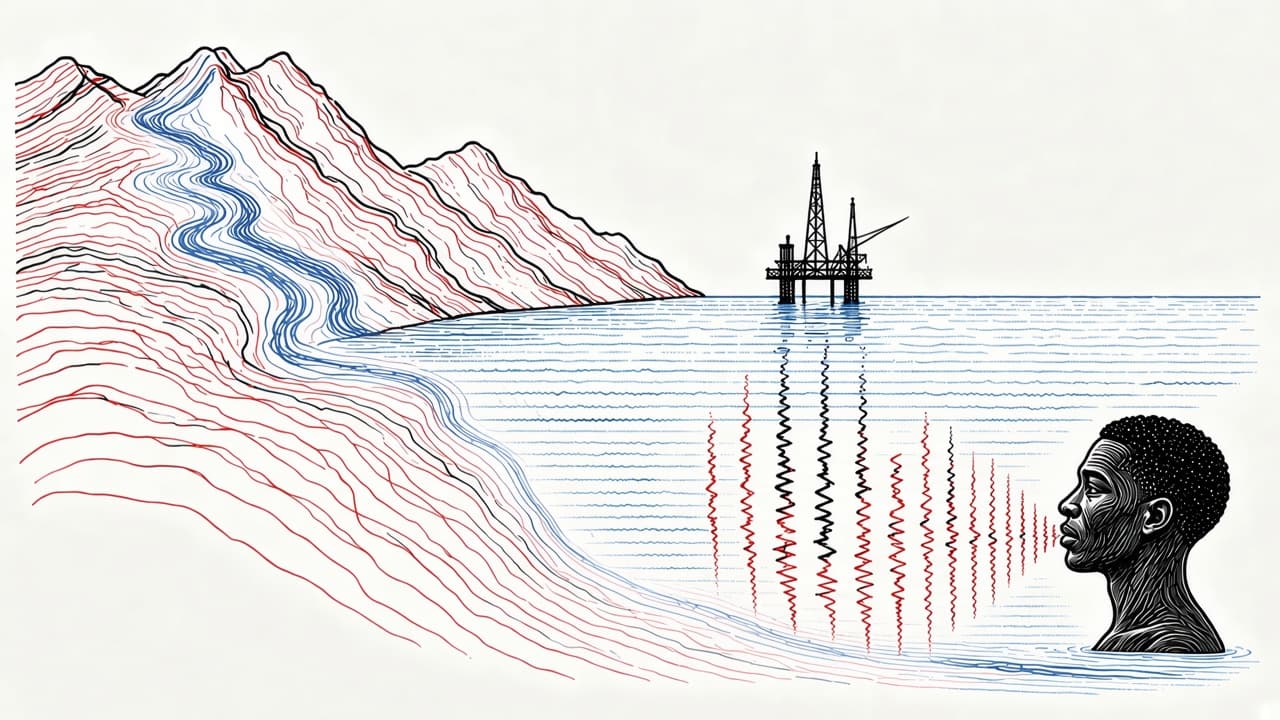
Last post was me talking about how it's time to write... then I proceeded to not put anything out for over a year. Welp
...
I spent the first part of my career as an earth scientist, helping teams safely reach rock formations tens of thousands of feet underground. These days I build and deploy AI agents into businesses.
On paper, those are two different careers. In practice, they're the same job: making conversation.
You show up with some expertise into a place that has been running fine without you — at least, most people there think so — and tell them there's a different way to do something. How you approach that makes or breaks it.
Listen to the Seismic
As a geoscience student, most questions I asked got the same answer: "Look at the rocks!" One of my geophysics professors had his own version: "Listen to the seismic..."
It didn't immediately make sense given you can't really listen to seismic. Seismic data comes from sending sound into the ground and measuring what bounces back. By the time it reaches your screen, it's been processed into lines and colors. 1
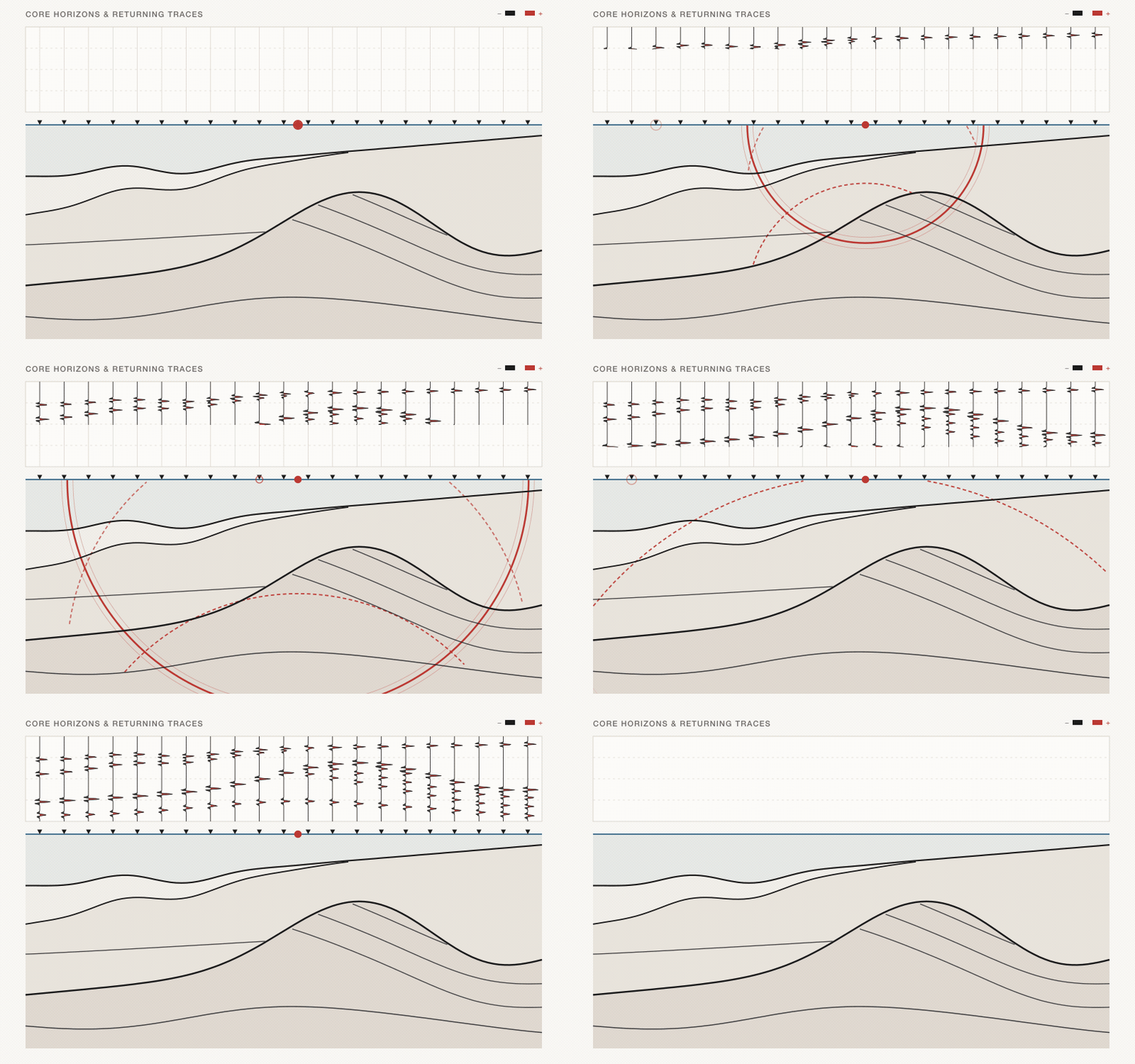
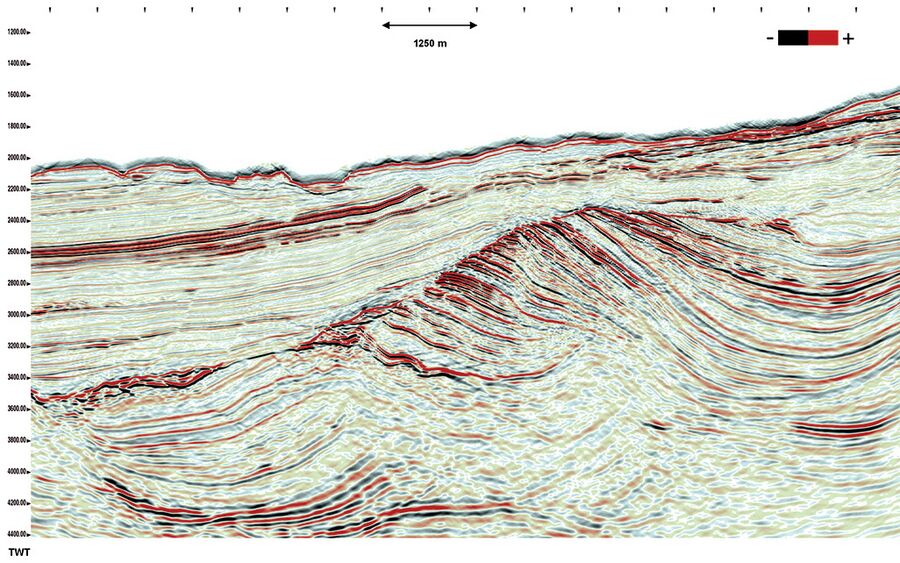
Let me know what you hear when you listen to this
He was asking us to think about the sound waves as they travel as a cross check against what we were looking at.
When I joined 11x, our agents had made a few hundred calls and people had complaints. So, naturally, I listened to half of them. For each one, I compared what happened against the prompt, edited the prompt, and ran it again. I did this for a couple of weeks until I developed an intuition for the model we were using at the time.
Debugging the Earth
Geology is the study of the history of the Earth. The Earth isn't laid out by formula. Sediment settles around whatever is present. To understand a formation you have to reconstruct how it came into being.
Most organizations are eerily similar. They're a product of accretion, not architecture. Centers of gravity form around the people who are there and how politically favored they are, and over the years that shapes the org chart and every process that runs through it.
When you deploy an AI agent into a business, you're not slotting a part into a machine. You're debugging an organization so you can fit something new into it.
...
Gathering Context
I joined Shell as a petrophysicist (a hybrid of a geologist and petroleum engineer) and spent half my first year offshore learning what people on the rig actually did with the work we agonized over back at the office.
A lot of rig work happens at night. There are many reasons for this, but I choose to believe it's because the yappers have gone to bed. I worked the midnight-to-noon shift, walking the deck, asking why things were done a certain way, eating, and working out with the crew.
Rig people appreciate a second pair of eyes, provided you can hang and understand their work. My biggest impact offshore didn't come from what I learned in a lab. It came from the relationships and from seeing how my work actually got used, which changed how I delivered it.
Deploying AI is no different. You don't walk in and tell people AI will do their job better. You hang out and let them show you how they work before proposing anything.
I once worked with a customer who showed up with very thorough documentation. Over 8 hours across several calls, I mostly listened, watched them work, and asked questions. During a live test, we discovered that every website submission triggered automations that transformed the data before anyone saw it. I never could have found that on my own — I don't work there. Once it surfaced, they saw the gaps in their own process and traced the rest down themselves. Shared ownership solved the problem.
Even the most polished process hides a lot of detail. Hanging out is how you find it. 2,3
Small Talk
Na from clap dance dey start.
During my time offshore, I'd spend 14 days isolated with the same crew before we all flew home to very different lives. Some people I became close friends with; others not so much. Either way, I still had to keep the conversation going. Thankfully I learned this lesson at my first job where I worked 10-hour days in a truck driving around doing surveys.
Good small talk is a warm-up. It helps you find the right starting point with someone you don't know yet, or tells you quickly not to bother at all.
Conversational agents face the same test. On a support call, the customer knows what they want, so they lead. On a sales call, the agent is asking so the opening has to give them a reason to answer.
Read the Exhaust
You can usually tell who someone has been talking to, or where something has been, from what it gives off. 4
On a rig, that's the mud logger's job. 5 As you drill, the mud carries rock cuttings and gas back to the surface. The shape of the cuttings shows how the bit is performing and whether the rock is holding together. The gas tells you what layer you've hit. Expected gas is fine, unexpected gas means you're somewhere you didn't plan to be.
Conversations work the same way. What someone says is a stated preference. How they say it is the revealed one. Short answers tell you how present they are. Sharp questions indicate preparedness or engagement.
That's also the problem with most AI evals. An eval is only as good as what it measures. A mud logger is valuable because they know which cuttings and gases matter for their well. A generic eval is like watching for any gas at all.
Knowing what to look for is half the job. Discernment tells you whether to celebrate or find the lifeboats.
Less Is More
Back at the office, we'd spend weeks calculating the safe weight of drilling fluid. It needs to be heavy enough to hold the rock back, light enough not to crack it. We'd generate low, base, high, and extreme cases. There was a whole ritual to how those numbers got generated and approved.6
So imagine my surprise the day I handed a chart to a driller offshore and he drew a straight line through the base case, radioed the number to the cabin, and went about his day. In hindsight, you can only act on one number at a time, and he had a hundred other things to watch.
The AI version of this is reaching for more technology whenever a process isn't working — another feature, another agent, another integration. Code is cheap, after all.
But that robs the customer of a role in the fix. If it still doesn't work, they stop trusting the technology altogether. You can't use more technology to solve something technology couldn't solve.
Find the actual cause and you can usually shift one small thing in the process. That proves the case, builds trust, and earns you the right to do more. Less technology is generally more.
Discernment
In the subsurface, you are paid strictly for having an opinion. That's it. Which means you need confidence in your opinion, and you need to know exactly where it ends. Everything we measured had limits on how much it could really tell us. 7 Knowing what you didn't know mattered as much as what you knew.
Moving into software was jarring. Most software problems are tractable. If it can be broken down into repeatable steps, then it can be solved. That breeds a special kind of confidence.
My preferred approach to discernment is a follow-up question just past the edge of what someone has said, to find where their knowledge ends. Not to catch them out. It's in service of delivering what they actually want, and it makes clear to both of us where we need someone else to come in and clarify.
Constraints Breed Creativity
Oil and gas has regulatory constraints to protects 3 things: life, the environment, and capital (equipment). Inside those lines, there's a lot of room to get creative (which tools to run, how to sequence the work, how to shave days off a well). There are many ways to reach the target as long as you respect the boundaries.
Training an agent works the same way: map out where it must never go, then give it freedom everywhere else. Work backwards from what breaks if it crosses a line, and distill that into a short set of principles.
For the agents I work on, those boundaries protect three things:
- Intent. People show up with varying levels of it: low (casually browsing) to high (just filled out a form). We get one shot to pitch, gather context, and hand back a clear next step. The job is to breathe fire into that intent.
- Reputation. The agent is usually the business's first point of contact. A bad day for an agent means a brand gets misrepresented; a bad day in oil and gas means a movie gets made about your company.
- The conversation. It has to reach the end, or none of the above happens.
Following instructions, low latency, and truthfulness all matter, but only in service of the 3 above.
...
Looking Ahead
At some point, having a website became the default for every business. If you didn't have one, you didn't really exist.
Agents are next. Every business will have an agent that people — and other agents — can talk to. Whoever builds it will be doing the same job I've described here: hanging out, gathering context, and fitting something new into an organization that accreted around the people already in it.
That's the digital world. What excites me most is the physical one.
A while back I wrote about simplicity, and about a woman in her 80s who gave up on an errand because the parking meters wouldn't take coins and required an app she couldn't figure out.
The world we interact with is mostly manufactured. Why does it not speak back to us? 8
Footnotes
-
Seismic processing is both an art and a computationally intensive process. By the time the seismic traces are presented for interpretation, they're already interpreted. You're looking at someone else's interpretation of what the sound waves experienced ↩
-
John Salvatier puts it well in Reality Has a Surprising Amount of Detail. Before you notice an important detail, it's invisible, because you don't know what to look for. Once you've noticed it, it becomes so familiar that you see right through it ↩
-
To learn about an organization, you need to spend time with the experts and watch them work. When they walk you through their process, they tend to gloss over things. Not intentionally. It's just so much a part of how they work that they take it for granted. Fish don't see the water. Good reading on tacit knowledge ↩
-
Mud loggers often know something bad is about to happen before anyone else does. They weren't always good at communicating their value, and drillers would sometimes try to get them cut from operations ↩
-
These are called pore pressure plots. The pomp and pageantry around them is for good reason. Pore pressures tell you the amount of pressure being applied on the fluid inside the rock. You need to slightly exceed it in order to keep things stable during and after drilling. That's what keeps the rock from breaking apart in unpredictable ways. It's also what keeps the fluids (read: gas, oil, or water) in the rock until we were ready to handle it. The catch is that they don't apply uniformly, we never felt like we had enough data, and we were calculating them for rock we hadn't seen yet, knowing minor shifts could change everything. We agonized over those numbers because they're what keep a well from blowing out underneath the rig. But a driller has to drill ↩
-
Seismic resolution is a good example. At the depths I cared about (>15,000 feet below ground), a single line on the seismic was resolving about 200 feet of rock. At the level of detail rock fabric can have, that's really nothing. What you can infer is contrast. Typically fluid content of the rock. Hydrocarbons are less dense than water ↩
-
This is how I got into voice AI in the first place. In 2018, I was visiting a mentor in Houston. We were about to settle in for some FIFA when he grinned and said, "watch this." Then: "Alexa, let there be light!" The lights were already on, so I didn't know what to expect. Then the blinds started moving down, letting in the golden sunset. Magic. That kind of future is now well within reach. But it shouldn't stop at our front doors. We should be able to talk to the devices outside our homes too, and have them talk back and do things for us ↩